
AI & Intelligent Systems
We embed applied AI into everyday products — LLM copilots, RAG search, computer vision and predictive models that turn your data into decisions.

For a decade, CyanBerg has engineered custom software, web, mobile and intelligent AI systems for ambitious teams — turning bold ideas into products that scale.
Trusted by product teams across industries
What we do
We embed applied AI into everyday products — LLM copilots, RAG search, computer vision and predictive models that turn your data into decisions.
Enterprise-grade platforms engineered for scale, security and speed.
Fast, accessible web apps built on modern architecture.
Native-quality iOS & Android experiences from a single codebase.
Resilient cloud architecture, CI/CD and observability that never sleeps.
Threat modelling, audits and hardening baked into the build.
Pipelines and dashboards that surface the signal in your numbers.
Selected work
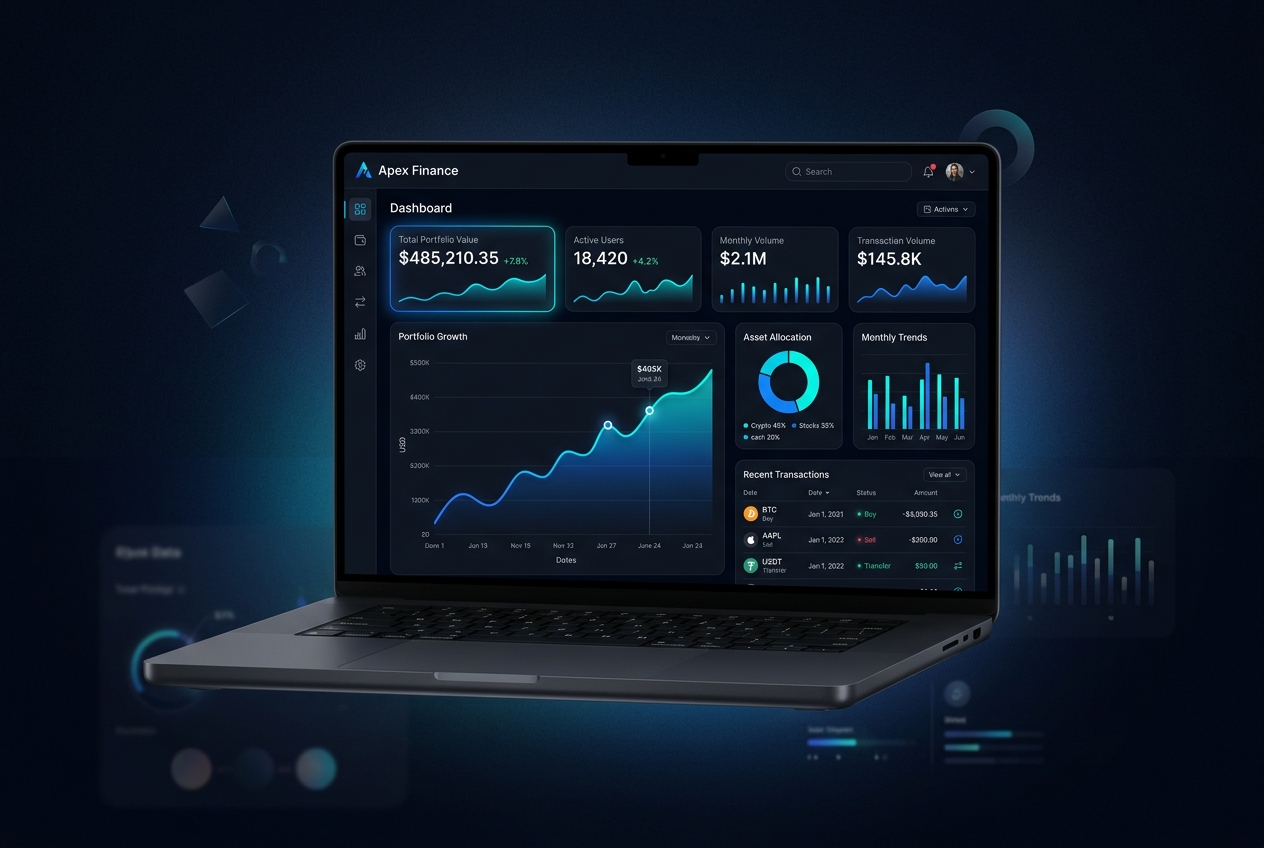
We rebuilt a lender's underwriting stack around a streaming risk engine, pairing rule-based checks with ML scoring so credit decisions happen in seconds, not days.
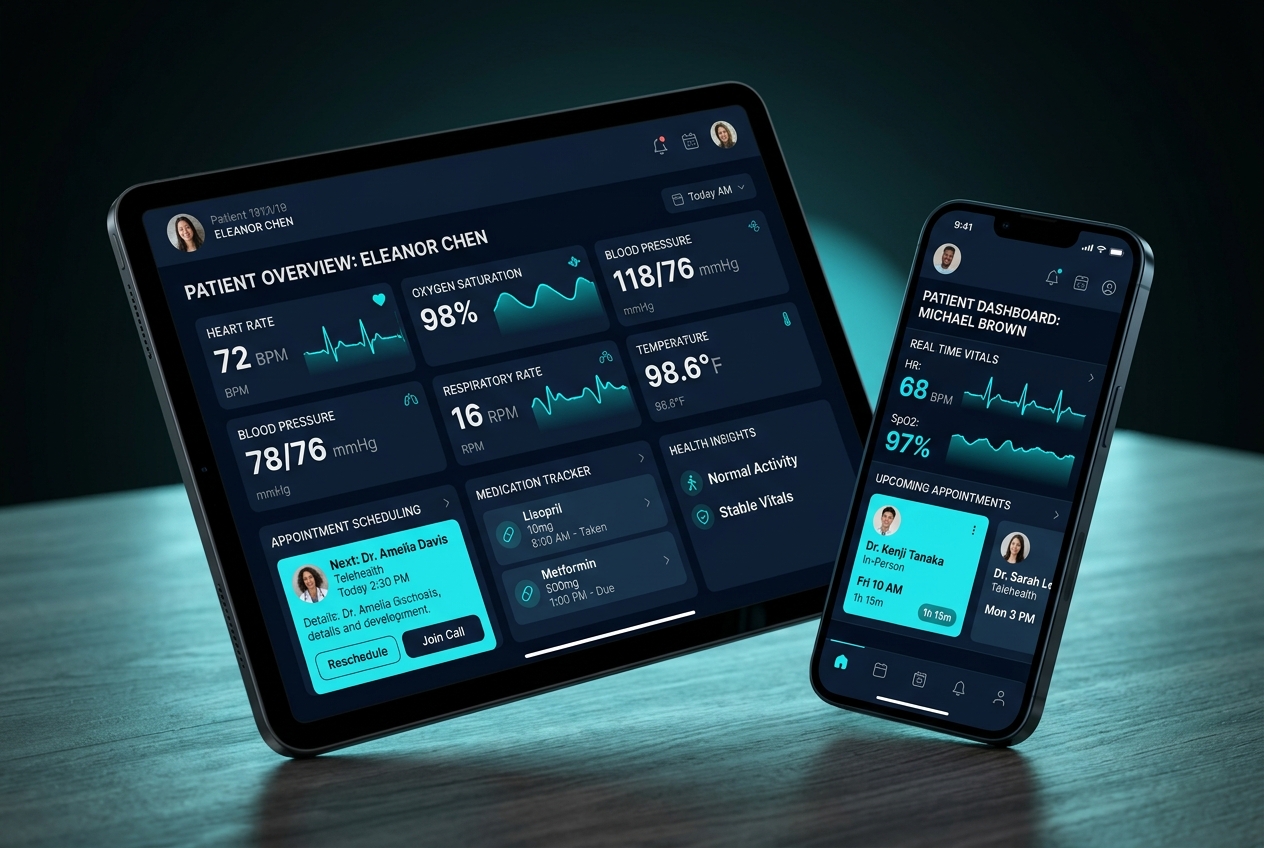
A HIPAA-aligned platform that streams vitals from wearables to care teams, with smart alerting that separates real deterioration from noise.
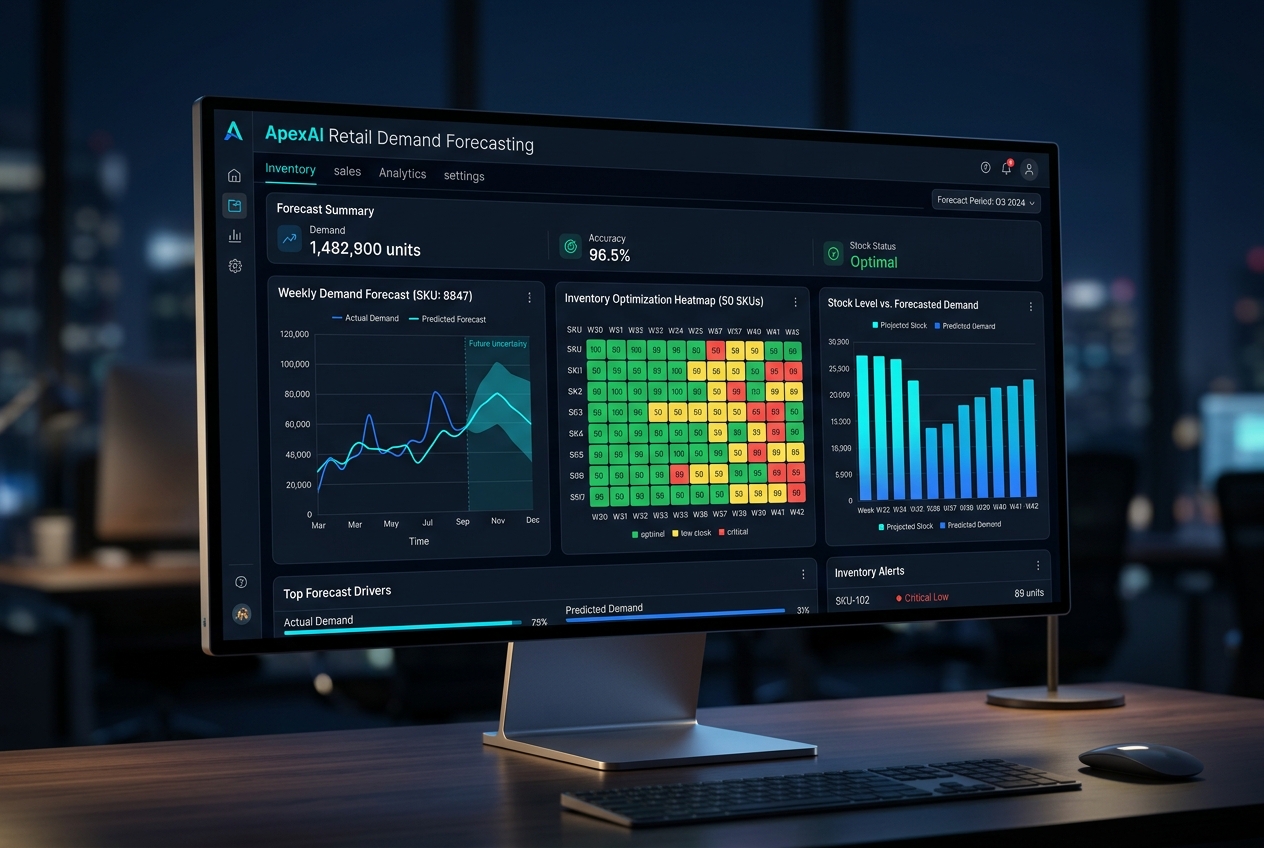
Store-level demand prediction built on three years of sales, weather and festival calendars — so shelves stay stocked and dead inventory stops piling up.
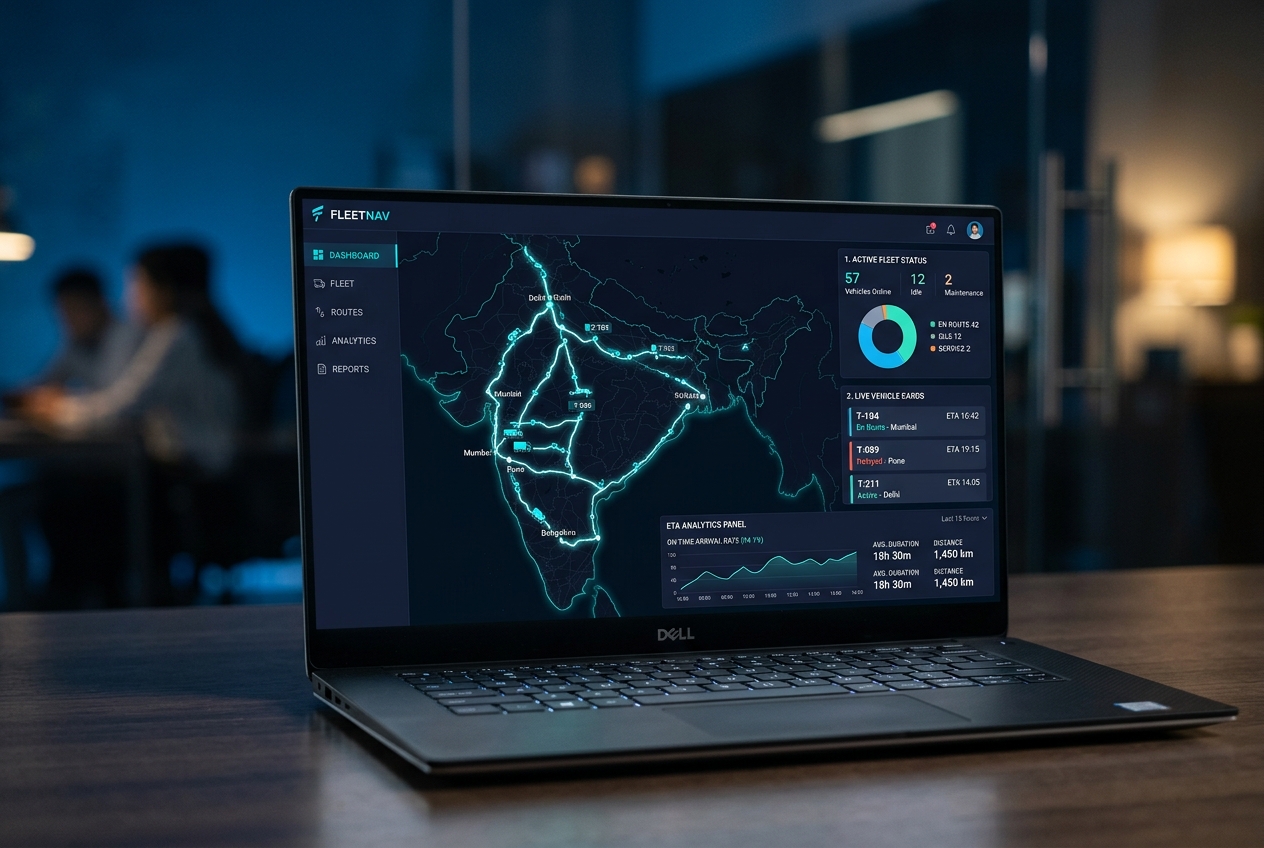
Live route optimisation and predictive ETAs across thousands of vehicles, with a control tower that gives dispatchers one source of truth.
Our approach
Every engagement starts with your business outcome, not a tech stack. We map the problem, pressure-test assumptions and define what success measurably looks like — so the code we write earns its keep.
Intelligence is a first-class ingredient across everything we ship. From automated workflows to predictive insight, we design AI that quietly makes your product sharper, faster and more useful.
A decade of shipping production systems taught us to engineer for the version of your business that doesn't exist yet. Clean architecture, ruthless testing and 24/7 support keep you moving.

Why CyanBerg
You work directly with the engineers building your product — seasoned specialists across AI, cloud, mobile and security, not a rotating cast of juniors.
Tight, iterative delivery with working software in your hands early and often. Momentum is a feature.
Clean, documented, transferable code. No lock-in, no black boxes — the IP is yours from day one.
Client voices
"CyanBerg re-architected our platform and folded AI into the core workflow. Delivery was fast, the code was clean, and support has been genuinely round-the-clock."
"Our new web presence tripled organic reach. The team paired sharp design with real engineering discipline — a rare combination."
"Their analytics pipeline surfaced insights we didn't know we had. Decisions that took weeks now take minutes."
"Cloud migration was seamless and scaled effortlessly with demand. CyanBerg feels like an extension of our own team."
Insights
Most "AI assistants" fail because retrieval was an afterthought. Here's how we structure grounding, evaluation and fallbacks.
Velocity without visibility is just speed towards an outage. What a minimal, honest observability stack looks like.
The gap between a demo and a dependable system is organisational, not technical. A field guide to crossing it.
Get in touch
Tell us about your project and we'll get back within 24 hours. Free quote, no obligation.
The fastest way to lose a user's trust is to give them a confident wrong answer. Most enterprise "AI assistant" projects fail exactly here: teams treat retrieval-augmented generation as a chatbot feature, when it is actually an information-architecture problem.
In our production RAG builds we start with the corpus, not the model. What documents exist? Who owns them? How stale are they? A retrieval system over an unmaintained wiki simply automates the distribution of outdated information. We push clients to define document ownership and freshness SLAs before a single embedding is generated.
Second: evaluation is not optional. We build golden question sets with domain experts — typically 100–300 questions with graded answers — and score every pipeline change against them. Chunking strategy, hybrid search weights, re-ranking models: each is a measurable decision, not a vibe.
Finally, design the fallback path. A trustworthy system says "I don't have enough information" and routes to a human. That single behaviour, more than any model upgrade, is what makes users come back.
Engineering · May 2026Every team wants velocity. But velocity without visibility is just speed towards an outage you won't understand. We've inherited enough codebases to know the pattern: features shipped weekly, zero structured logs, and a production incident that takes three days to diagnose because nobody can answer "what changed?"
The fix doesn't require a platform team. Our minimal honest stack for a growing product: structured JSON logs with request IDs, three or four RED-method dashboards (rate, errors, duration) per service, and alerting on symptoms users feel — not on CPU graphs nobody reads.
The economics are stark. Instrumenting a service properly costs a day or two. A single undiagnosable production incident routinely costs a week of engineering time plus customer trust you can't buy back.
Observability is not a luxury for later. It is the difference between shipping fast and merely shipping often.
AI Strategy · Apr 2026The demo took three weeks and impressed the board. Eighteen months later it still isn't in production. If that sounds familiar, the problem is almost certainly not the model.
The gap between pilot and production is organisational. Pilots skip the hard questions: Who owns the system when it misbehaves? What is the escalation path when the AI is wrong about a customer? How is performance measured against the process it replaced? Production demands answers.
Our playbook: start with a workflow, not a use case. Pick one process with a clear owner, a measurable baseline and tolerance for a feedback loop. Ship an assistive version first — AI drafting, human approving — and let the accuracy data argue for autonomy.
Teams that cross the chasm treat AI as a product with a lifecycle: monitored, versioned, evaluated and owned. Teams that stall treat it as a procurement item. The technology is rarely the bottleneck — the operating model is.